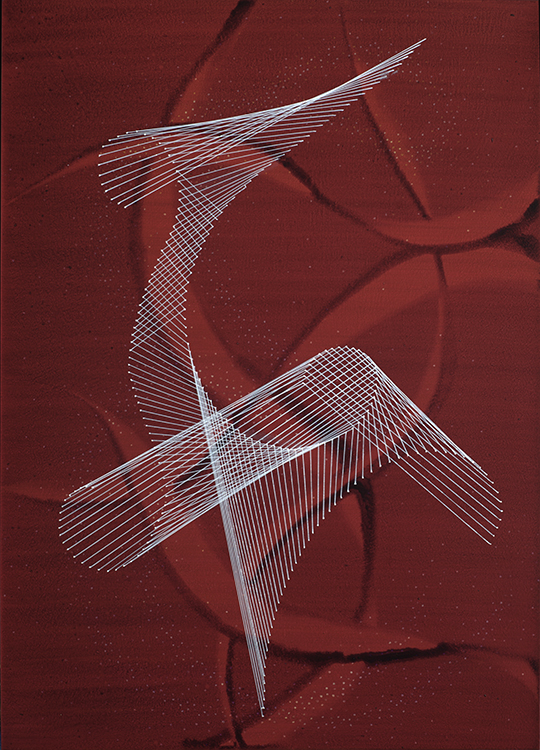
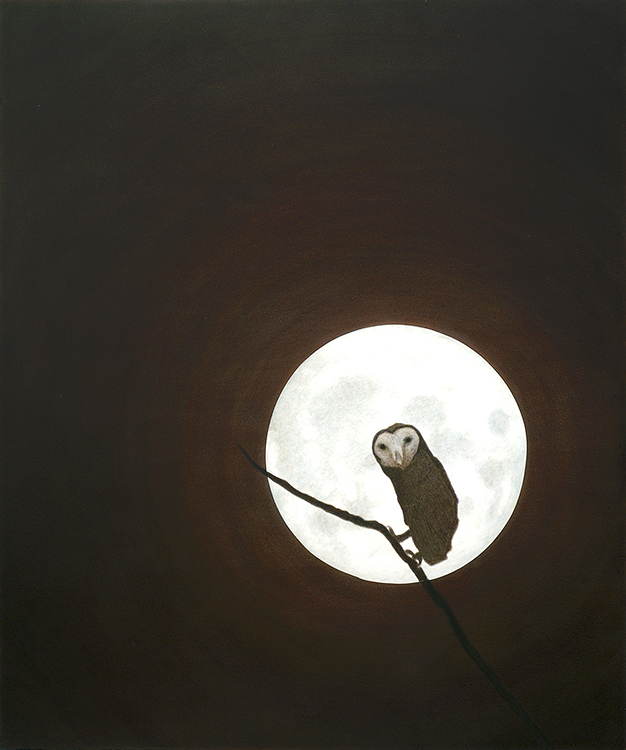
In this series I bury the white lines into the background using many layers of transparent color. As they get deeper into the layers of color they fuse with the dark matter background.

“Solar” 25×18 acrylic on panel 2024

In this series I bury the white lines into the background using many layers of transparent color. As they get deeper into the layers of color they fuse with the dark matter background.
“Solar” 25×18 acrylic on panel 2024
I’ve been doing line drawings as a form of aesthetic relaxation for many years. I use these straight lines to form organic shapes and fluid movement that dance and flow in a freeform way.
I have used these line patterns in many earlier, larger composition as a secondary or side motif. I decided to formalize them as a series after using them as elements of larger compositions for well over 10 years.
“Grandmother” 60 x 37 ink on panel
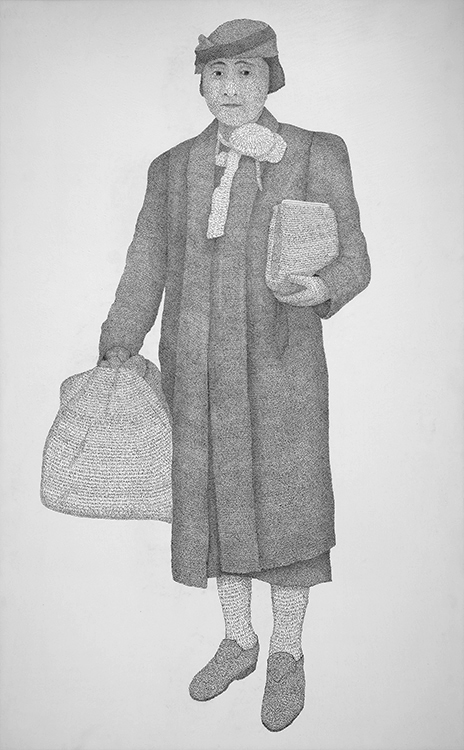
This is a portrait of my grandmother I did left handed as I injured the nerve in my right arm. It is inspired by the same photograph as my grandfather’s portrait, taken by Dorothea Lange when she was commissioned to photograph Japanese Americans being interned during the start of the US entry into World War II. This shot was taken in San Francisco as my grandmother and her family waited to board a bus for an internment camp in Utah. My grandfather and grandmother were immigrants from Japan, but my father and his brothers were born and raised in San Francisco.
The words used to make the marks that compose this portrait are the text from the Immigration Act of 1917, which barred most immigration from Asia. The late 19th century saw the rise of “Yellow peril” the perceived threat of Asian societies replacing the American identity which led to a series of immigration acts in the late 1800s early 1900s. There was the Chinese exclusion act of 1882, the Gentlemen’s Agreement of 1907, the Immigration Act of 1917, and the Immigration act of 1924, that were aimed exclusively at Asian immigration.
Detail:
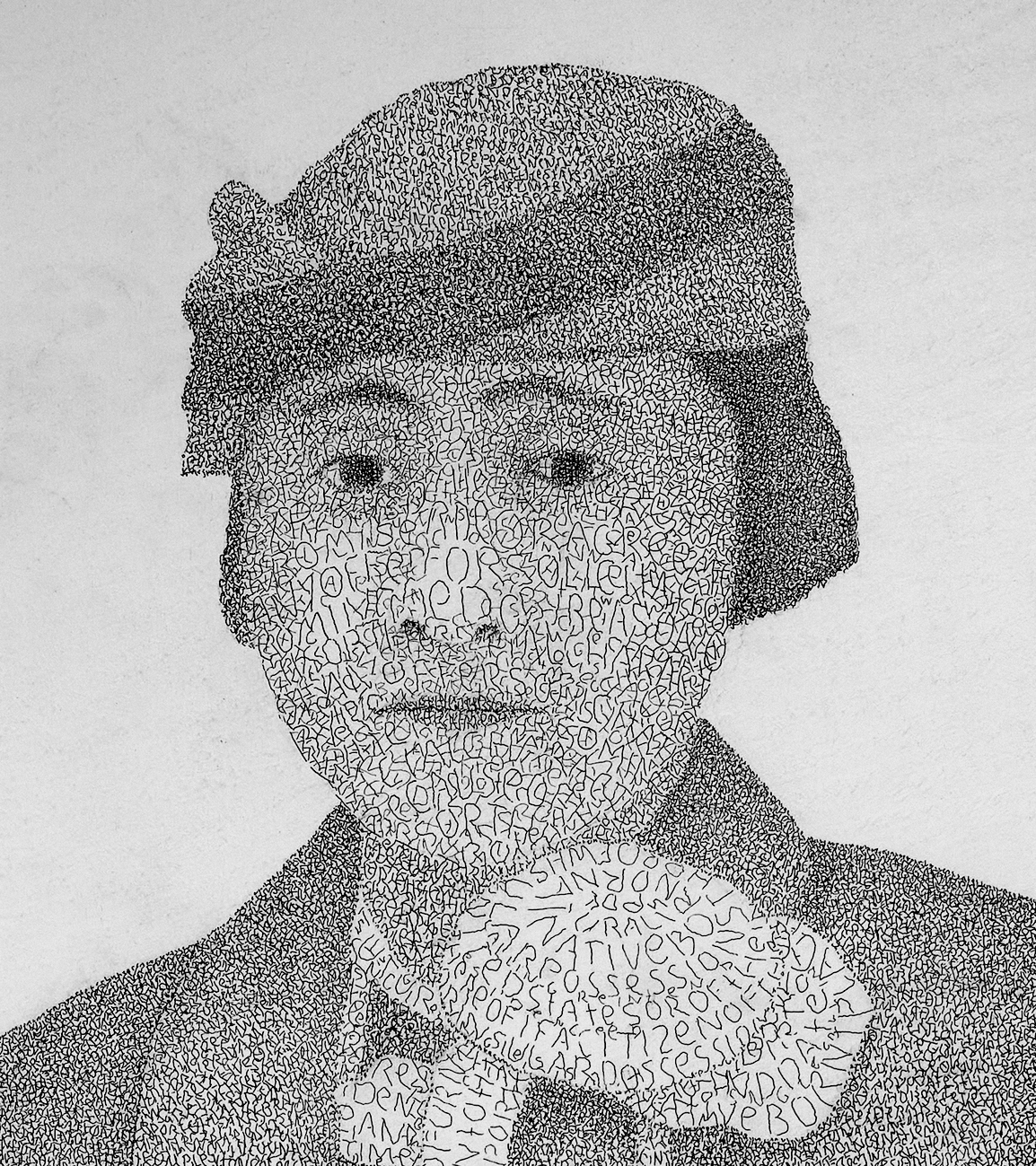
Dorothea Lange photo

“Humpback Whale” 47×55
acrylic on linen 2023
New to the endangered species series. Thanks to whaling bans the Humpback whale population is recovering.

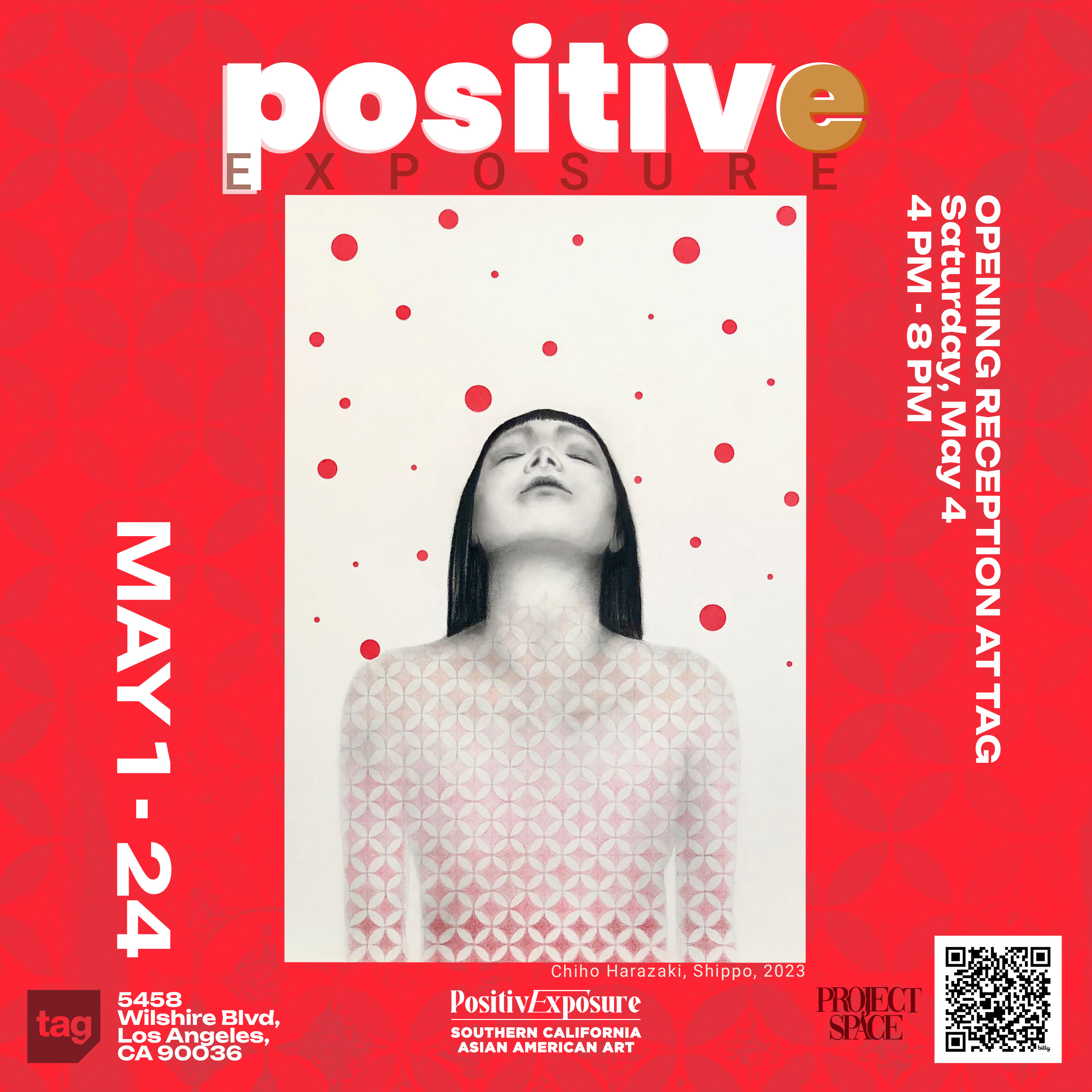
Two pieces from my “con.Text“ series, “Father II” and “Kimiko Kitagaki” will be on view at TAG Gallery from May 1 to May 24 as a part of Positive Exposure, an exhibition celebrating perspectives of the Asian American Pacific Islander artistic community.
opening reception at TAG
5458 Wilshire Blvd
Saturday, May 4, 4–8 pm.
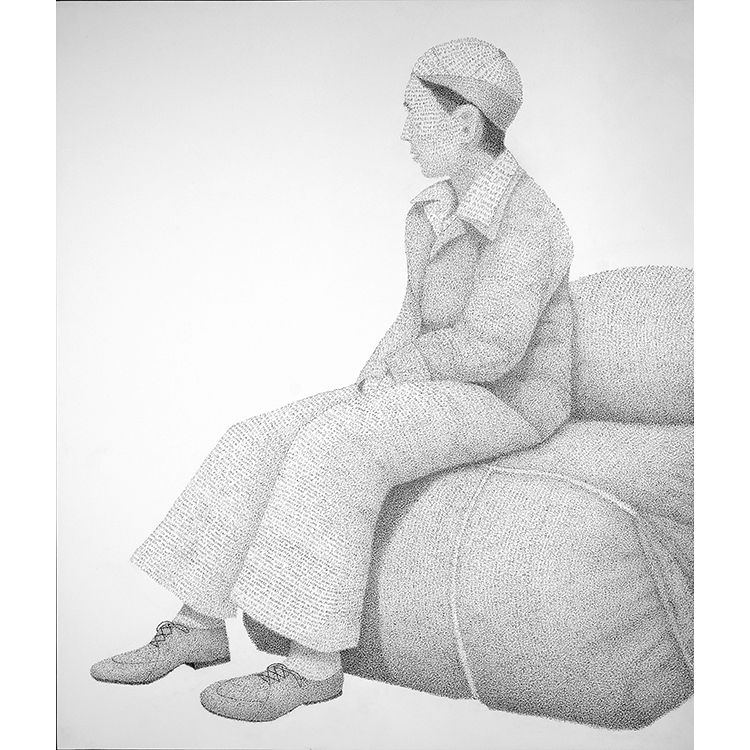
“Father II” 40 x 34 ink on panel
A portrait of my father based on a photograph taken by Dorothea Lange when she was commissioned by the War Relocation Authority to photograph the Internment of Japanese Americans residing on the west coast during WWII
The piece is rendered using text from the California Alien Land Law of 1913, which targeted mostly Japanese farmers who were “aliens ineligible for citizenship” and prohibited them from owning agricultural land or possessing long-term leases over it.
I was lucky to find three photographs taken by Dorothea Lange of my father and his family in San Francisco when he was 17. He went on to enlist into the U.S. Army out of the Topaz Internment camp in Utah and served as an interrogator and interpreter in the Pacific theatre for the Military Intelligence Service.


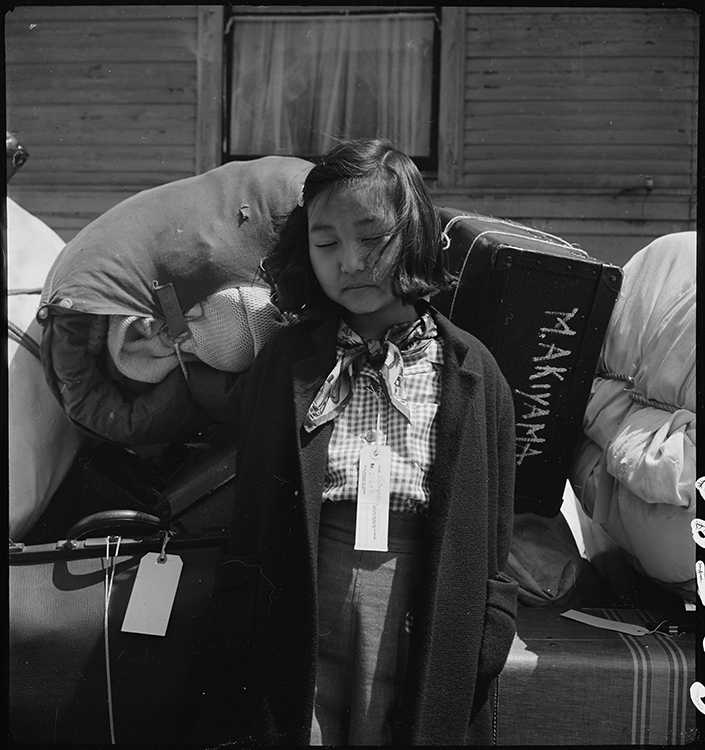
“Kimiko Kitagaki” 36 x 28 ink on panel
Another portrait based on a photograph taken by Dorothy Lange of Kimiko Kitagaki as she waited with her family to board a bus that would take them to Tanforan Assembly Center, a converted horse stable, and eventually to more permanent housing in an internment camp built in inhospitable surroundings inland from the coast.
The words used to make the marks that compose this portrait are the text from Executive Order 9066, which was an Executive Order signed by FDR that established military areas excluding those of Japanese descent and establishing the internment camps away from the West Coast.
Billis Williams Gallery will have one of my older pieces in their booth at the SF Art Fair.
San Francisco Art Fair 2024
April 25-28, 2024
@billiswilliams.gallery
Booth F05
“Vico’s Science” Oil and wax on canvas 2002.
In 2001 I started experimenting with cold wax medium by mixing it into oil paint, allowing it to partially cure then carving into the painting. I would then load the scars with paint and sand it back even with the surface. This would produce very fine lines with many imperfections where the surface cracked as I scratched into it.


Monica’s family moved to Compton near south Los Angeles in the mid 50’s amid a backdrop of intense racial discrimination. Some of the first black families entering Compton neighborhoods were met with violence, vandalism, and terror. One of the many forms of discrimination was in the use of housing covenants, deed restrictions and extralegal measures that restricted minorities from home ownership in many parts of Los Angeles. They were limited by covenants as well as a narrow access to financing known as redlining. These covenants were a part of southern California housing since the late nineteenth century and they were struck down partially in 1948 and then completely in 1953.
The words I chose to use in the formation of this portrait are sections from current residential deeds that still to this day contain the covenants restricting ownership to whites only, though they lack any legal standing.
Part of the Lakers “In the Paint” program.
Available Online : https://www.bandofvices.com/itp2024
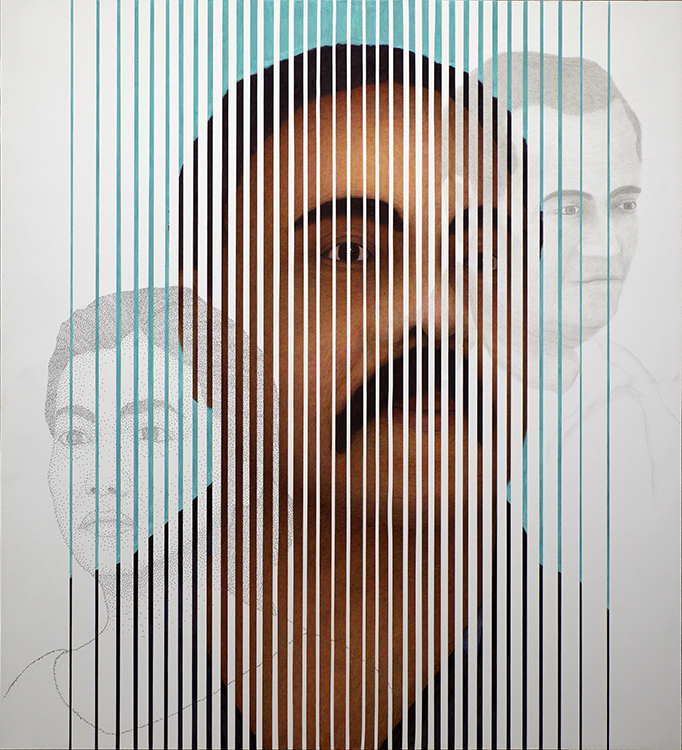
Appolos: The Crenshaw District”
44 x 40 acrylic, charcoal, graphite, ink on panel.
This piece depicts three separate subjects in a simplified racial history of the Crenshaw district in Los Angeles.
Developed in the 1920s as a white suburban outpost the Crenshaw District remained minority free until 1948. This restrictive ownership was based on covenants written into the residential deeds that stated one cannot sell, rent or lease to a non caucasian. It remained this way until the Supreme Court struck down the racist housing covenants in 1948.
As a result of this ruling in the 1950’s many Japanese Americans and African-Americans moved into the area.
They shared feelings of being discriminated against and as a result they formed bonds and established a community feeling based on mutual respect and admiration.
This portrait attempts to convey the ethnic history of an area that is continuing to evolve in its racial diversity.
On view until Feb 24
Band of Vices
5351 West Adams Blvd
Part of the Lakers “In the Paint” program
I am honored that the Bakersfield Museum of Art has acquired two paintings from early in my career to add to their permanent collection. It is a privilege to have work included in their esteemed collection and is truly a moment of immense pride and joy for me as an artist.
I am deeply grateful that the museum recognized the value and significance of my work, and I am thankful for the curatorial decision to incorporate it into their prestigious collection. The knowledge that my art will be displayed alongside other exceptional pieces in the museum is both humbling and inspiring.
I want to extend my appreciation to Victor Gonzales and the entire team at the museum for their expertise and dedication to the arts. It is truly a testament to the museum’s commitment to fostering and celebrating artistic expression. I am thrilled to contribute to the cultural richness and diversity that your institution represents.
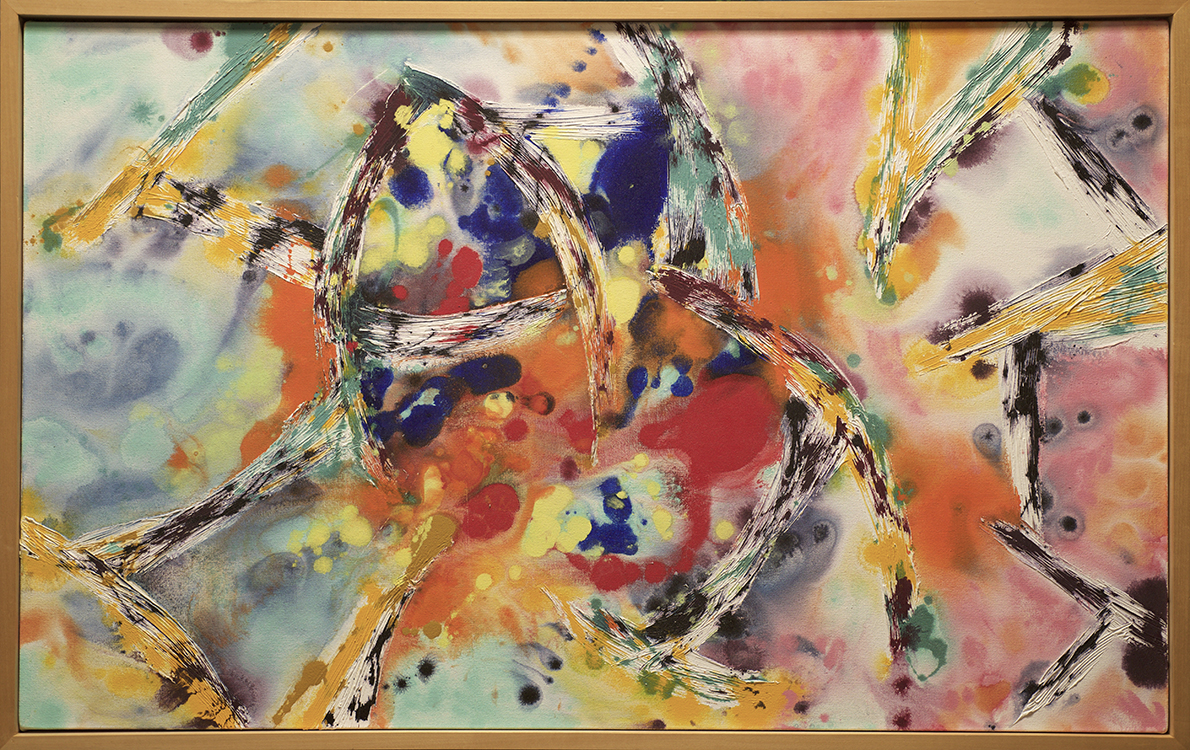
“Love Falls the Tears” 30 x 48 acrylic on canvas 1995
I was working in acrylic figuring out flow, bleed and viscosity. I used visual elements and gestures from movements of the past to feel with my own hands how gestures are laid down in paint.

“Impermanance” 36 x 48 oil on canvas 1997
In 1997 I discovered a technique used during the renaissance where they used many layers of paint to build a transparent, luminous black instead of an opaque, flat black. The colors used were yellow ochre, burnt sienna, terre verte green, alizarin crimson, prussian blue and aureolin yellow. In order to learn more about glazing and building a luminous dark I reduced my palette to these 6 colors.
“Madagascar Owl” 35 x 29 acrylic on panel, 2023
 Bryan Ida