
The switch to oil paint 1996-1997
After exploring acrylic paint for a few years and learning something of how it works I was intrigued by oil paint with its different nuance and properties. I completely abandoned acrylic for oil looking to learn some of its secrets. The movement and its reactions were completely different from acrylic, not in a bad way just different. I explored familiar imagery, but the pigments reacted completely different in thinner and air and I knew I would explore this medium much more in depth.
With these early oils I was still working on paper trying to complete a painting a day as I continued my exploration into color, form, and emotion using this new medium. My painting journey has taken me through many mediums and techniques with one constant, I visualize something and try to figure out how to do it in my own way as I attempt to connect with viewers and evoke an emotional response. I always learn with deeper conviction when I figure it out rather than being told what to do.
Change is life, Life is change.
Bakersfield Museum of Art.
“Bryan Ida : Life of Change: A Retrospective”
September 28th, 2023 – January 6th, 2024
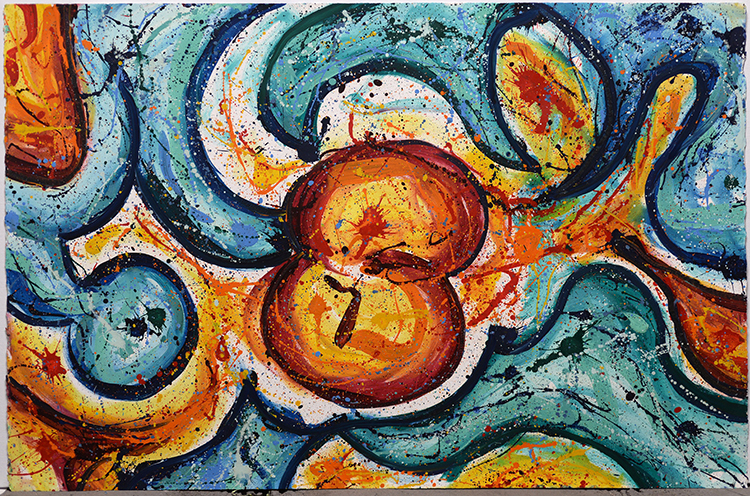
Untitled 32×48 oil on paper 1997

Untitled 32×48 oil on paper 1997
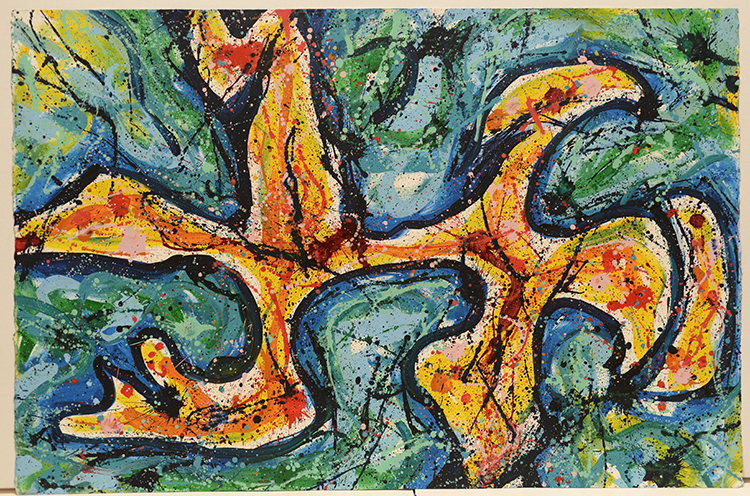
Untitled 32×48 oil on paper 1997

Untitled 32×48 oil on paper 1997
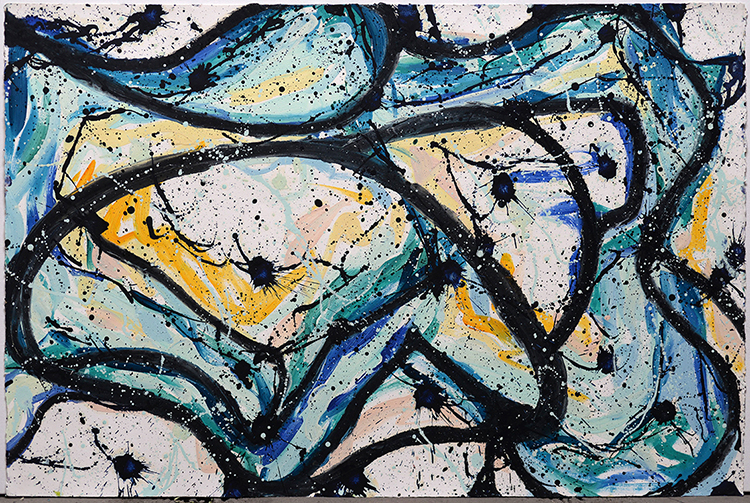
Untitled 32×48 oil on paper 1997
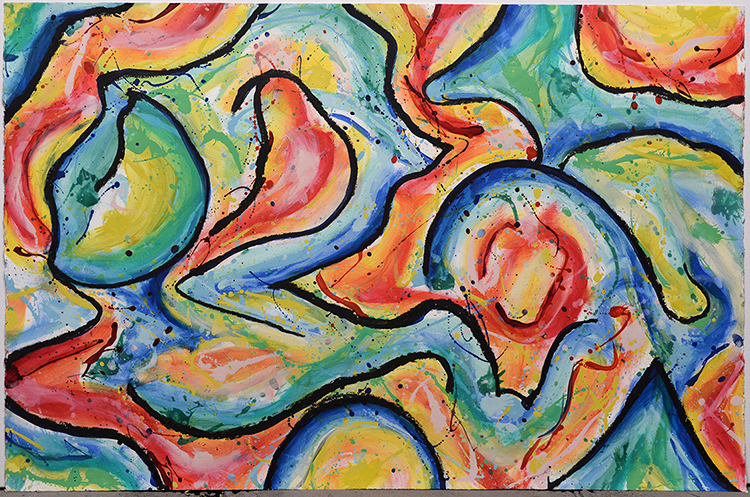
Untitled 32×48 oil on paper 1997
Black and White Studies 1996
Black and White Studies 1996
From my beginning in acrylic paint I have always looked to innovate, move forward and push the boundaries of my skill. Rather than live a life of artistic stasis and repetition I chose to embrace change. I change my work every 4-5 years sometimes sooner as I like to experiment, learn and allow the work to evolve while these trials take me in different directions.
As I go through my archive and travel through time to these past series I remember some of my thoughts that went into the work. I did a lot of work on paper early and just threw them in drawers and packets where they sat for 25 years.
At times in an effort to push myself and learn I will reduce my palette to just black and white or a single color. In this early period I began utilizing charcoal and acrylic to study value and gesture as I continued to use the expressive, large-movement language of abstraction that I started with. I was looking to distill movement and create a context as well as find something cohesive, complete and powerful as the focus of my brush narrowed.
Bakersfield Museum of Art.
“Bryan Ida : A Life of Change”
September 28th, 2023 – January 6th, 2024

Untitled 40×25 charcoal on paper 1995

Untitled 25×40 charcoal on paper 1995

Untitled 25×40 charcoal on paper 1995
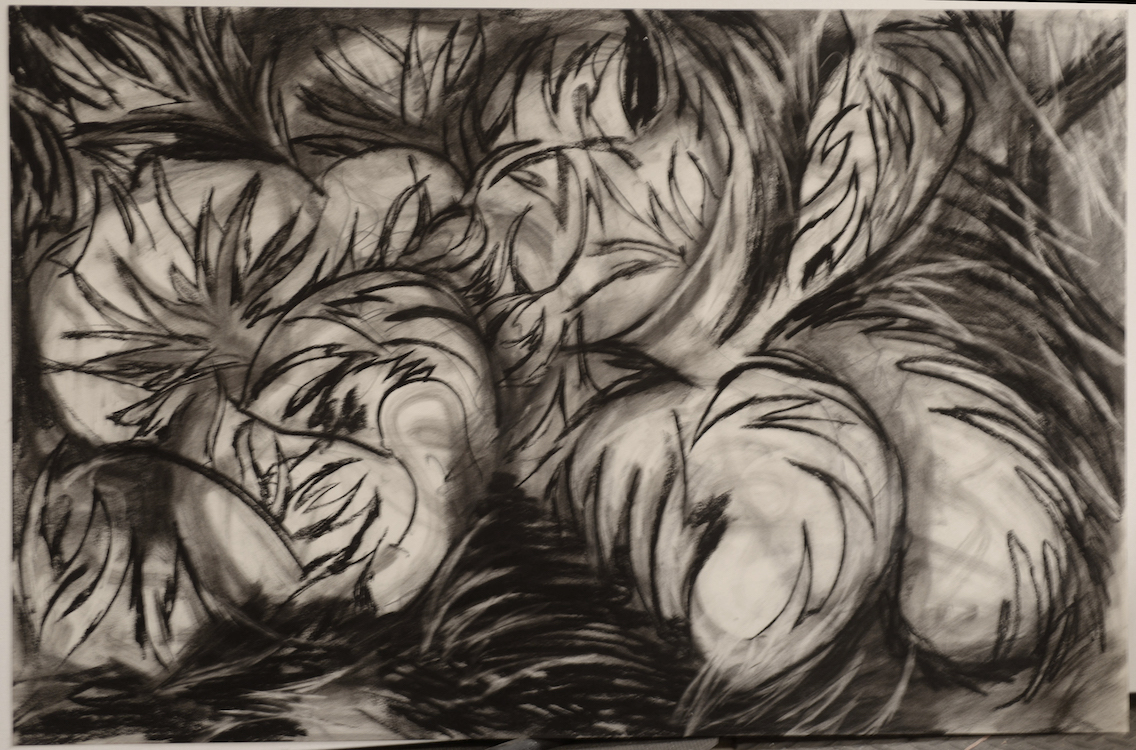
Untitled 25×40 charcoal on paper 1995

Untitled 48×36 acrylic on canvas 1995

Untitled 48×36 acrylic on canvas 1995
Early Work 1993-1995
Im going through my archive establishing a timeline of my work in preparation for my retrospective at the Bakersfield Museum of Art.
“Bryan Ida : A Life of Change”
September 28th, 2023 – January 6th, 2024
I will post this timeline as I write it in a series of posts.
Coming from a musical background where one learns by intense practice, repetition and gathered knowledge I applied this method of learning to my new medium. With no formal training and an intense desire to learn I painted something new every day. I would examine what I did the prior day, contemplate the lesson and finish something for the new day. I felt comfortable with the creativity, but the challenge was to figure out how to express that creativity into something deeper using the eyes instead of the ears.
I continued working in acrylic figuring out flow, bleed and viscosity. I used visual elements and gestures from movements of the past to feel with my own hands how gestures are laid down in paint.
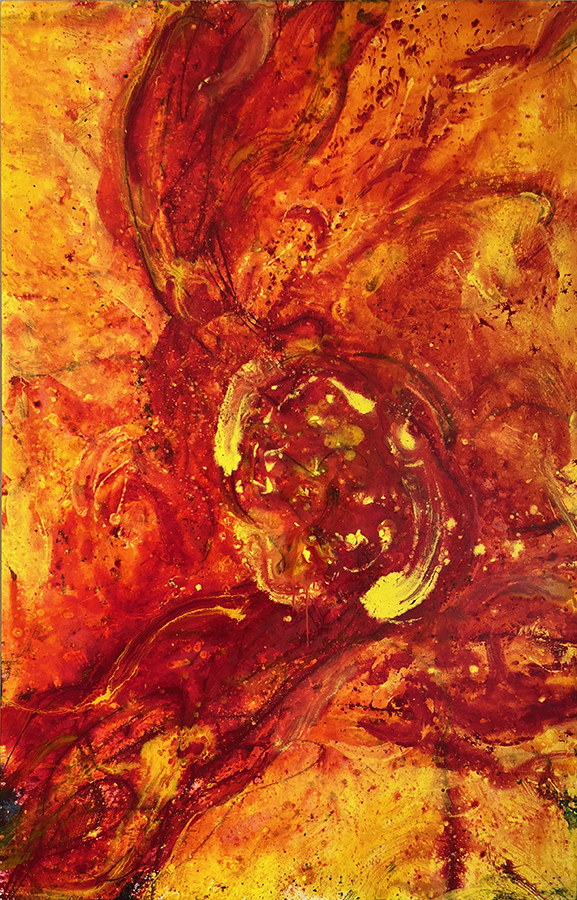
Untitled 84 x 54 acrylic on canvas 1993

“Nature Balanced with Spirit” 38 x 58 acrylic on canvas 1994

“Between Fear and Desire” 24 x 36 acrylic on canvas 1994
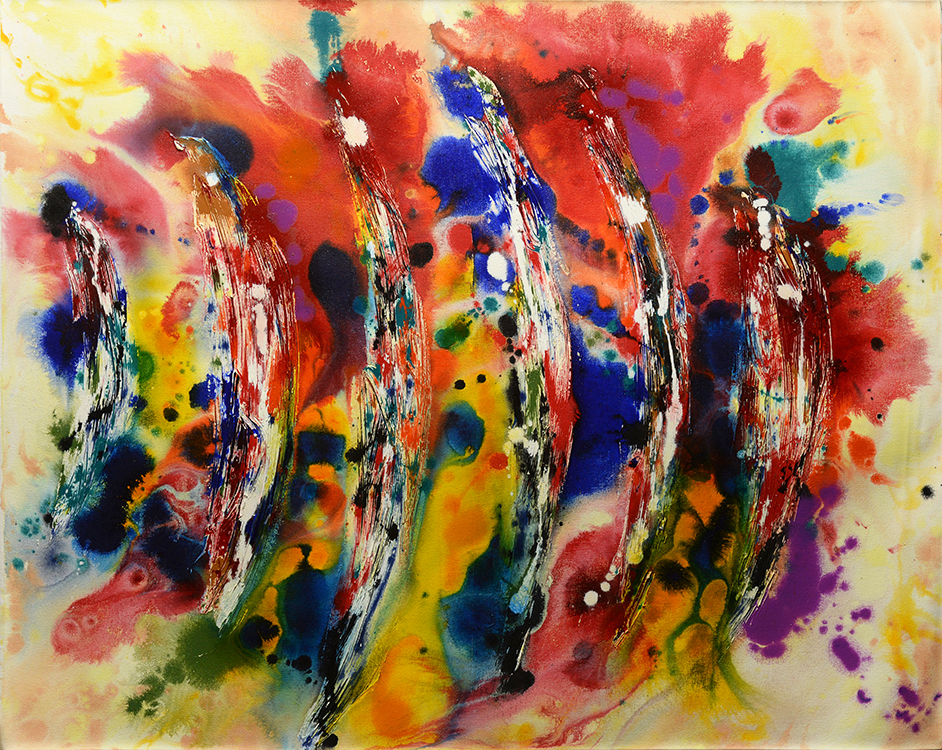
“The Storm Outside” 36 x 48 acrylic on canvas 1995
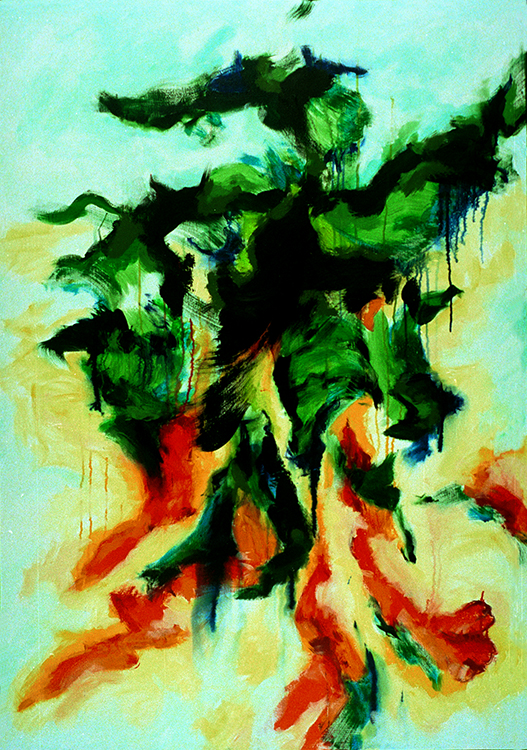
Untitled 60 x 48 acrylic on canvas 1995
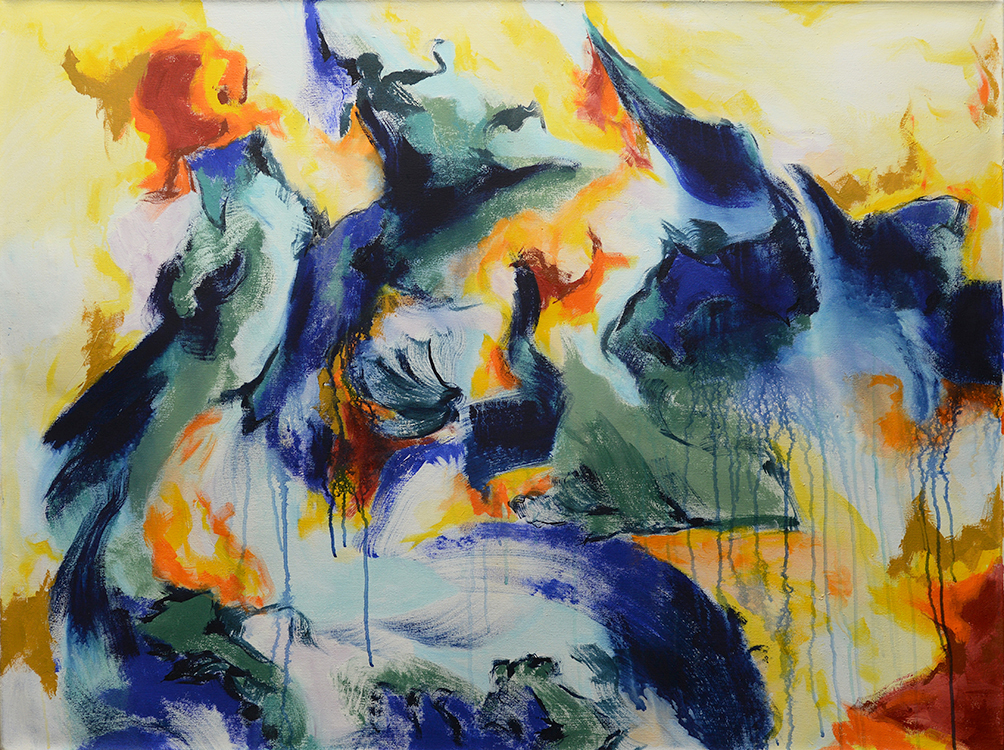
Untitled 36 x 48 acrylic on canvas 1995

“Fire on Blue” 36 x 48 acrylic on canvas 1995
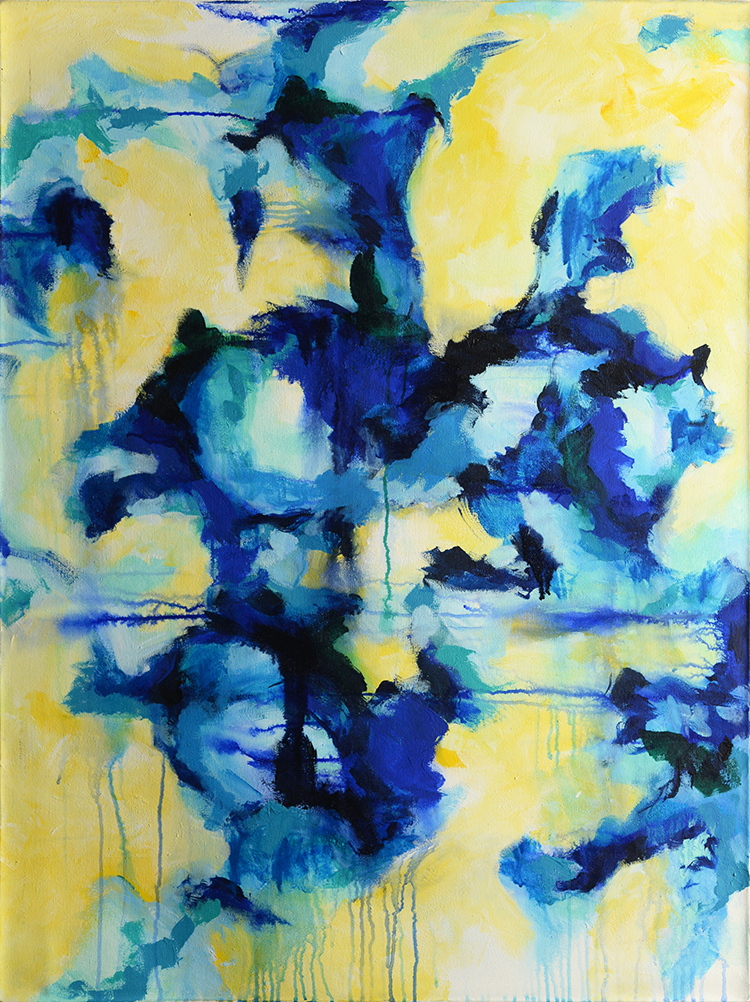
Untitled 48 x 36 acrylic on canvas 1995
Artillery Review
Thank you David Rubin for the wonderful insightful words in the review of my show “Deep” at Billis Williams Gallery.
The show is down but you can see the work here:


Retrospective at Bakersfield Museum of Art
I am honored and thrilled to announce that I will be having my first career retrospective at the Bakersfield Museum of Art opening September 2023. Titled “Bryan Ida: A life of Change” the show will cover my beginning into painting as I transitioned from music 32 years ago and continue on following my evolution as I worked through series after series in a constant quest for knowledge and the ability to communicate.
Early on I had dedicated my life to music but my life changed when I went to work for Sam Francis as his studio assistant in the 80’s. As I worked for him he helped me realize that the artistic language that was most natural for me was visual and I had the ability put together visual thoughts and phrases much easier than with music. Through his generosity he allowed me to paint in one of his studios that he no longer used and I started my life long journey into painting.
I started painting initially in Sam’s style but always wanted to move away from his identifiable technique. The first 5 years of my painting career is very derivative, but you can see me push away from the expected.
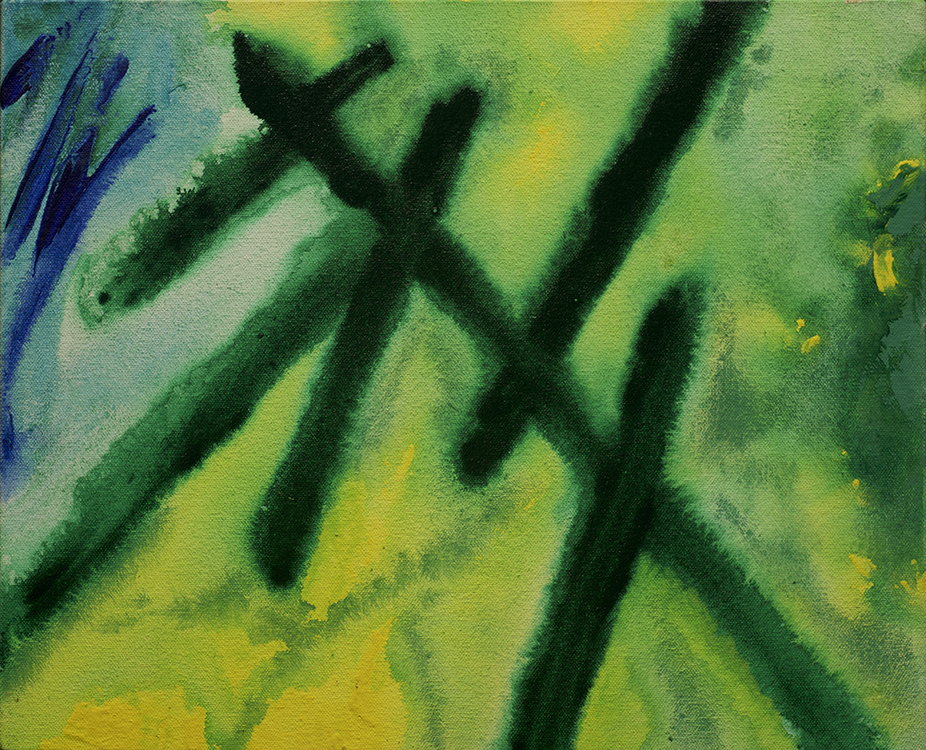
These are the first three paintings i did as a painter. I distinctly remember exploring how certain acrylic pigments moved into water while others retained their form.
12×14

15×22

13×16
Bakersfield Museum of Art
Honored to be a part of this show
“The Circle of Sam Francis: Experimenting in California”
Opening May 25th, 7-9pm
Bakersfield Museum of Art
“Sam Francis kept several studios and homes through the West Coast of California. In these studios Sam often surrounded himself with many young and emerging artists who provided him with help, care, and endless inspiration. Exploring the creative process was his driving force. In doing so, Francis created an atmosphere of experimentation that allowed his assistants to expand their artistic education and nurture their own creativity. The Circle of Sam Francis: Experimenting in California will highlight work made by Francis during this exciting era of artistic exploration and survey the artists who worked alongside the master.”
In the late 80’s I worked for Sam Francis as a studio assistant in his Bay Area studios. Eventually as his health declined he moved to LA for treatment and he moved me down to help out. I was living in his 20,000sf studio in Venice with my main focus prior to the move being music. As I discovered more about myself and with exposure to Sam I realized my abilities to express myself was more inherent in visual arts as opposed to aural so I turned to painting as my from of expression. I was given full access to the studio as he didn’t use it any more and I started my career as a painter.
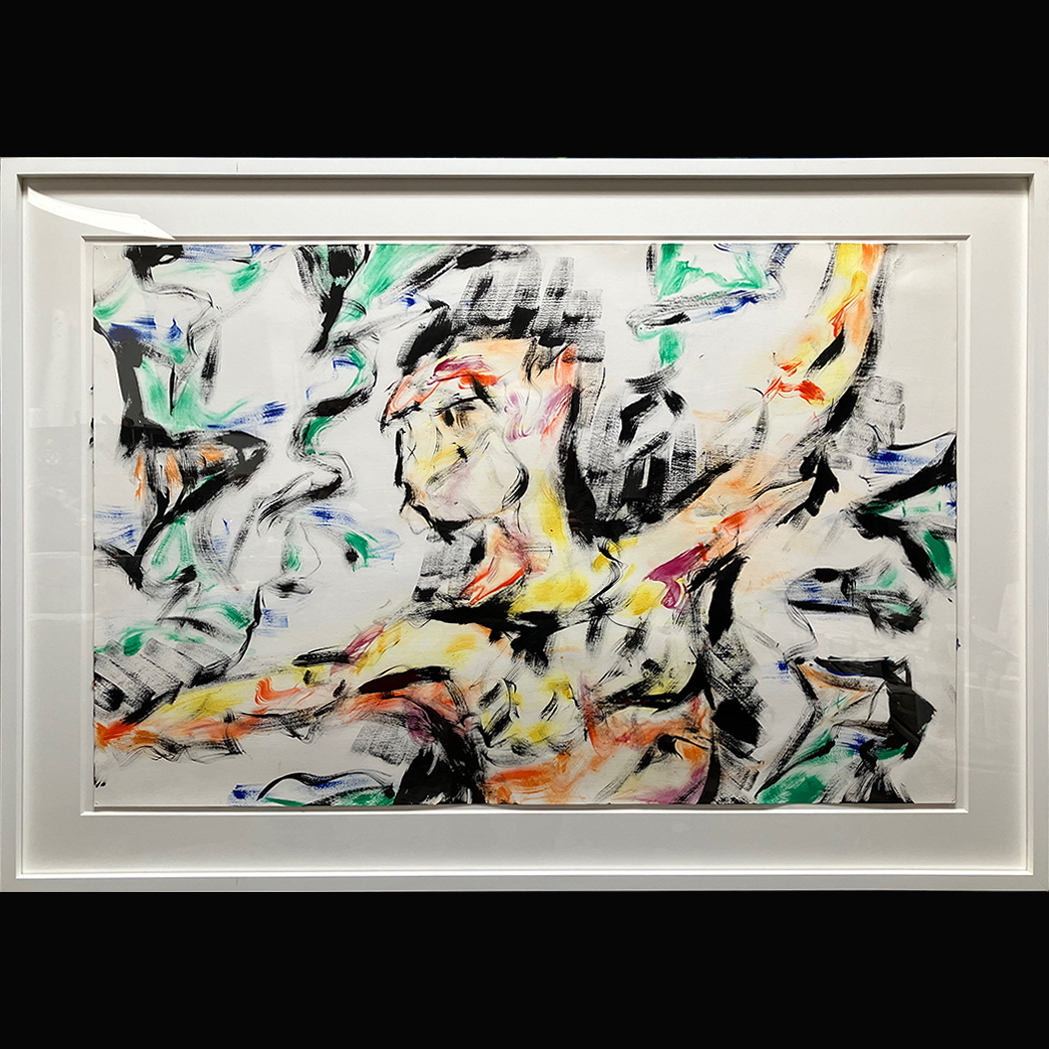
These three works are very early in my journey. the small red piece is the second painting I did as a painter in the studio. The framed figure is from a model my friends and I would bring in once a week and the third painting is when I was learning by painting in Sam’s style of pouring and flow.

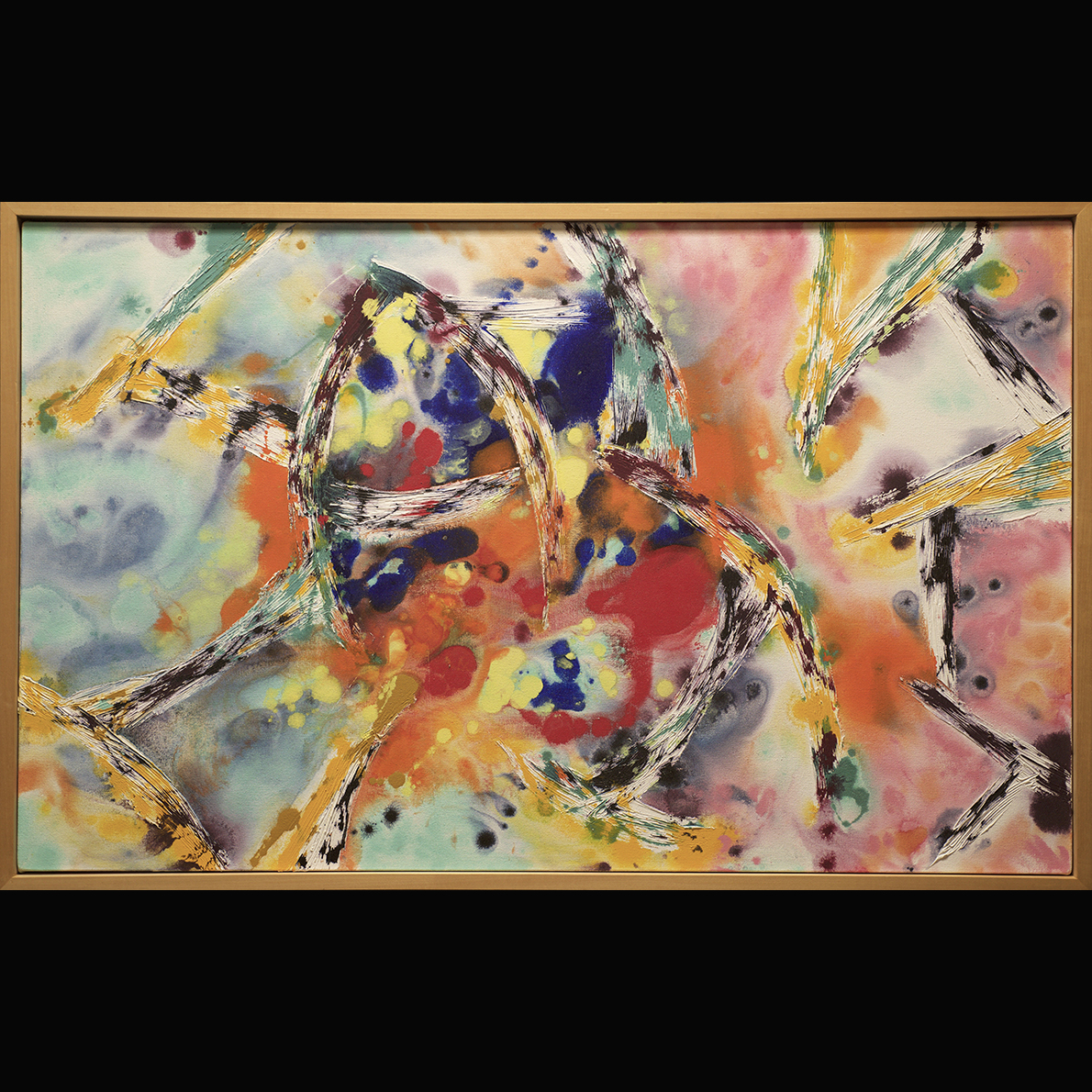
2 Reviews of “Deep” at Billis Williams Gallery
Thank you to Genie David and Joseph A. Hazani for these insightful reviews of my show “Deep” at Billis Williams Gallery in Culver City.
Genie wrote for DiversionsLA
Joseph wrote for adilettante
Works from the show available
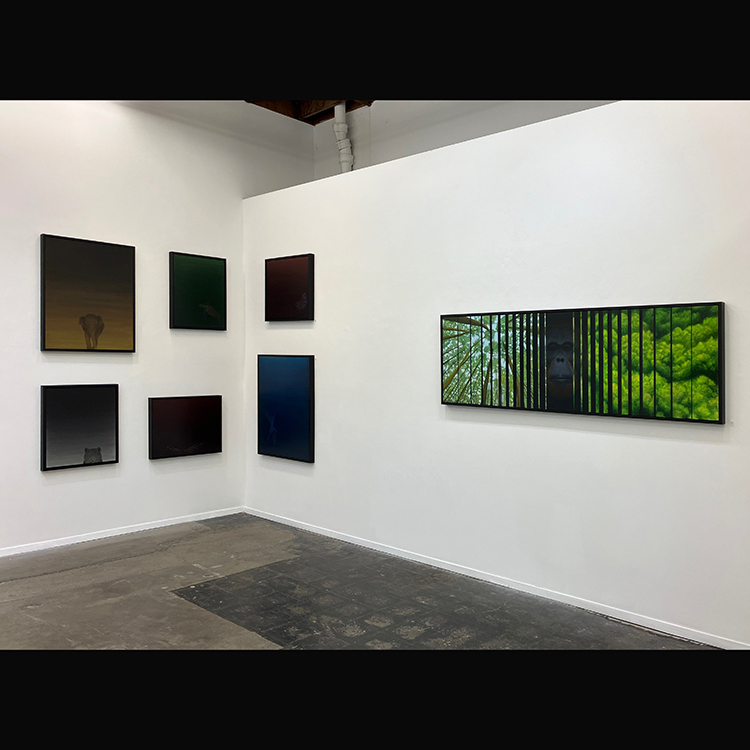

Install Pics of “Deep”
I am very happy with the show. Tressa and Jeramie did a standout job of placing the work in space. I especially like the grouping of six in the corner next to my favorite piece “Orangutan”.
This link has Available work through the gallery with sizes and more specifics.
Artist statement for ” Deep”


Solo show at Billis Williams Gallery

“Sumatran Tiger” 20 x 60 acrylic on panel
I am excited to present two new series of work in a solo show at Billis Williams Gallery in LA.
“Deep”
May 6th – June 3rd
Opening Reception May 6th 4 – 7 pm
Billis Williams Gallery
2716 S La Cienega Blvd
Los Angeles, CA 90034
310-838-3685
In “Deep”, I present two series of paintings that explore the delicate balance between human existence and the fragile ecosystems that sustain us. We are blessed with a world that contains such exquisite natural beauty and wonder yet mankind’s endless demand for energy and expansion puts immense pressure on these systems to survive. In the name of human advancement and expansion the cost to animal species and the environment is deep and irreversible. The true measure of a civilization is in its compassion and empathy, not in its ability to consume.
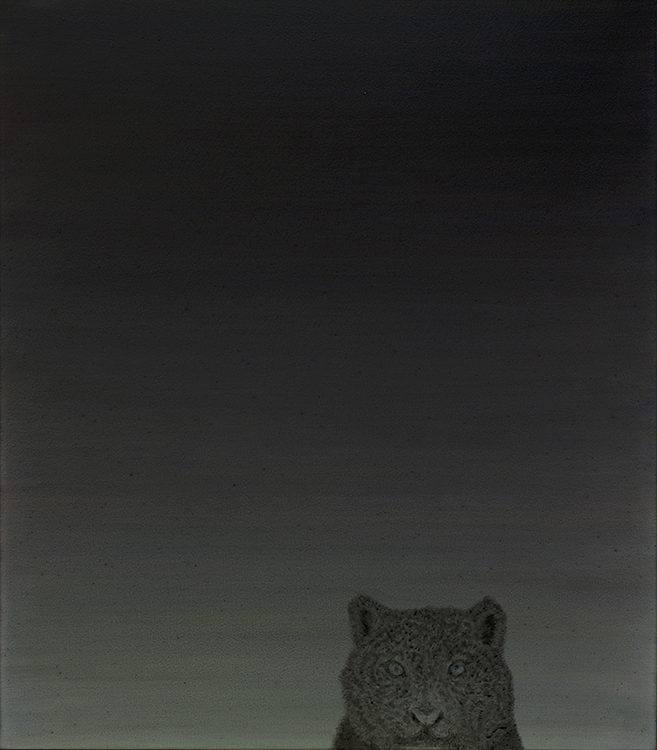
“Snow Leopard” 24 x 21 acrylic on panel
In the “Fading Light” series I explore the theme of endangered species, depicting each animal obscured in a deep darkness. The concept of fading light serves as a metaphor for the dwindling populations of endangered species and the threat of extinction that looms over them. This twilight also represents the passage of time, the impermanence of life and the move from the unconscious to awareness. As light frequently does, it represents hope and possibility in the face of adversity.

“Hawksbill Turtle” 25 x 20 acrylic on panel

“Blue Whale” 30 x 72 acrylic on panel
Within the “Nature” series, I cut apart landscapes of trees and nature and place them one on top of each other, breaking their continuity, while bending and merging what remains. The juxtaposition of the two worlds reveals the struggle we face today with the future of our planet dependent on our ability to balance the increasing demand for resources and the needs of the natural world.
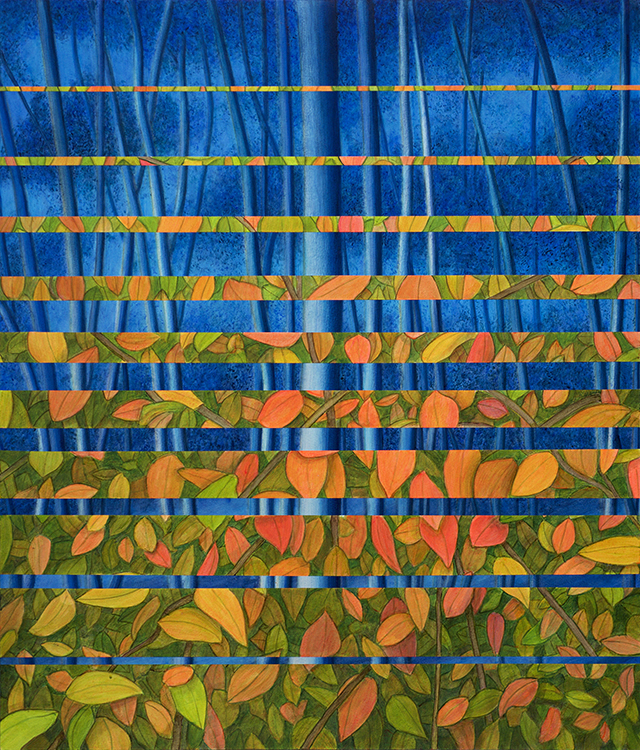
“The Park” 40 x 34 acrylic on panel
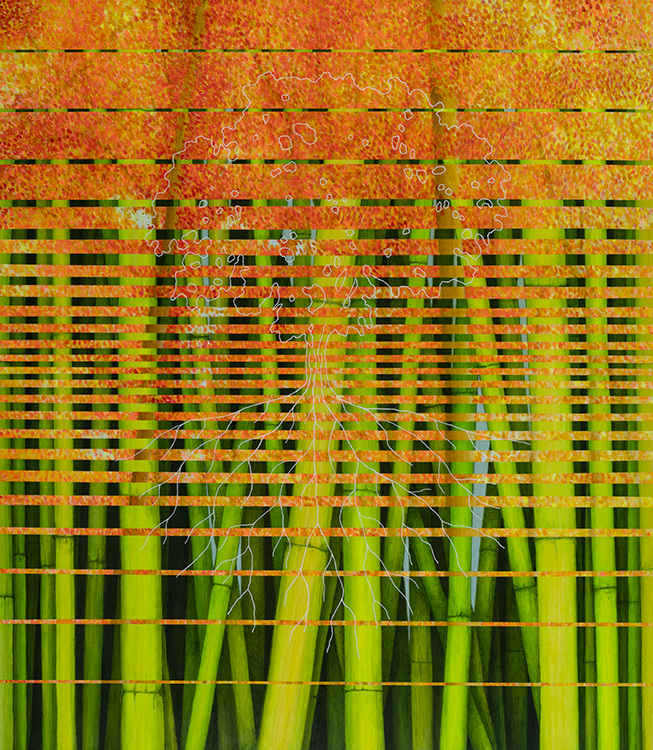
“Nature’s Way” 47 x 41 acrylic on panel
“Hawksbill Turtle”
“Hawksbill Turtle” 25×20 acrylic on panel
For an upcoming show at Billis Williams Gallery in LA
May 6th

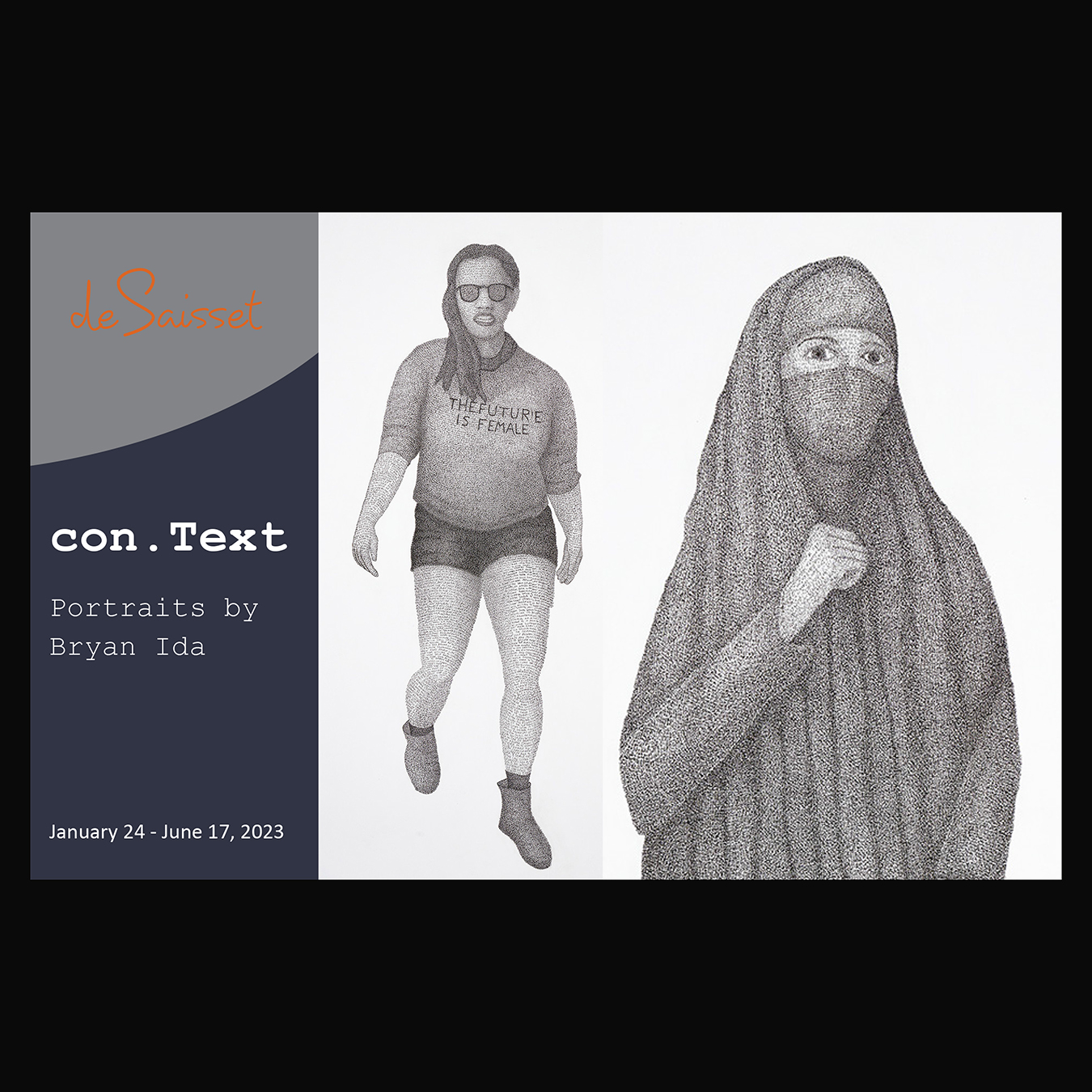
“con.Text” reception at the de Saisset Museum
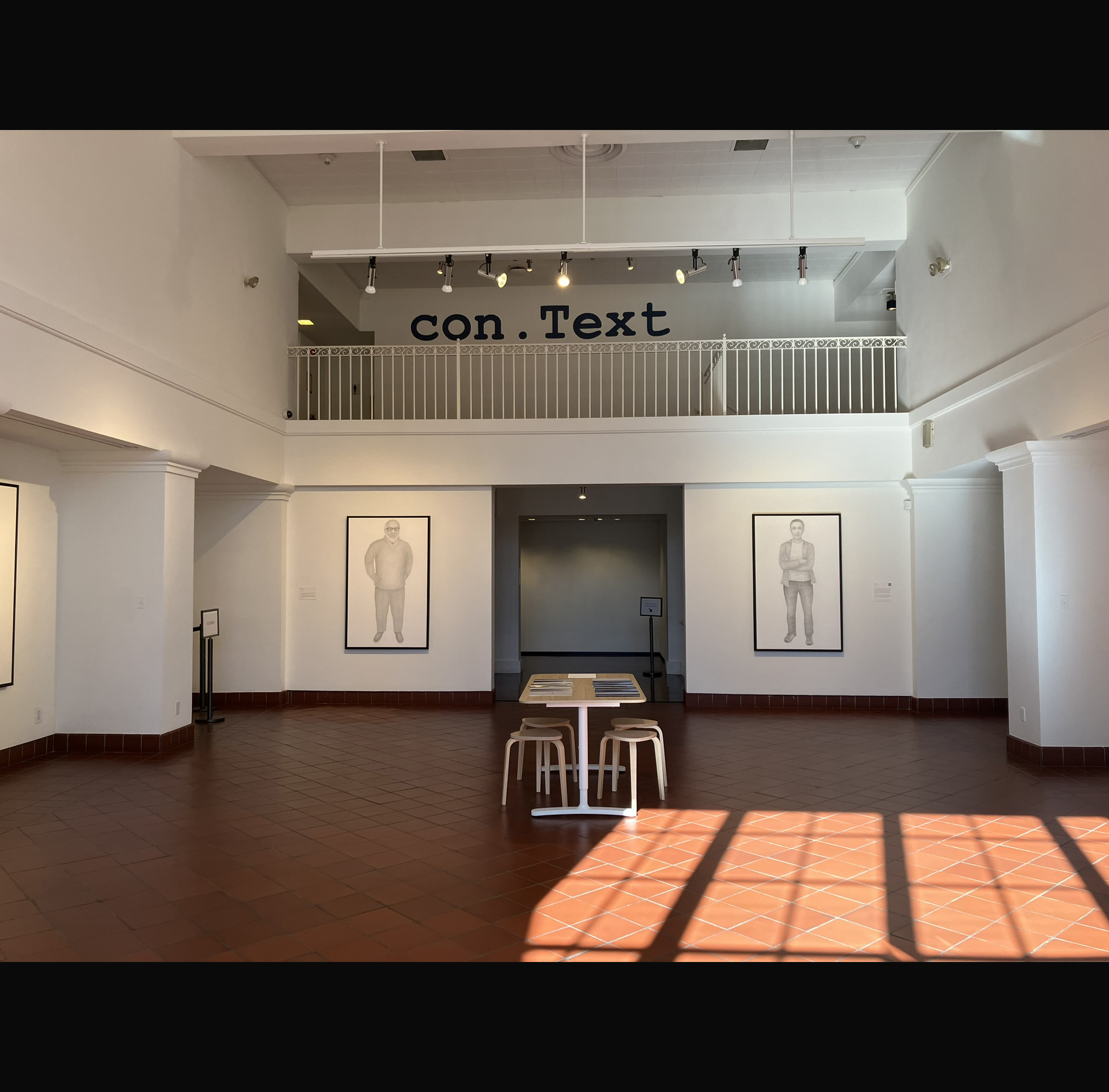
My ongoing show “con.Text”, featuring 18 ink on panel portraits, at the de Saisset Museum in Santa Clara will be having an outdoor reception Thursday, April 13, 2023 from 4-6 p.m.
There will be light refreshments outside on the lawns in front of the museum and you are welcome to take your time in the galleries.
The museum is located on the campus of Santa Clara University, 500 El Camino Real, Santa Clara, CA 95050 (408) 554-4528.
If you cannot make it mid week Thursday we have scheduled small group walk throughs with me on Friday April 14 and Saturday April 15 at 11:30 -12:15pm and 1-1:45pm. Due to capacity restrictions advanced registration is suggested and will open soon.


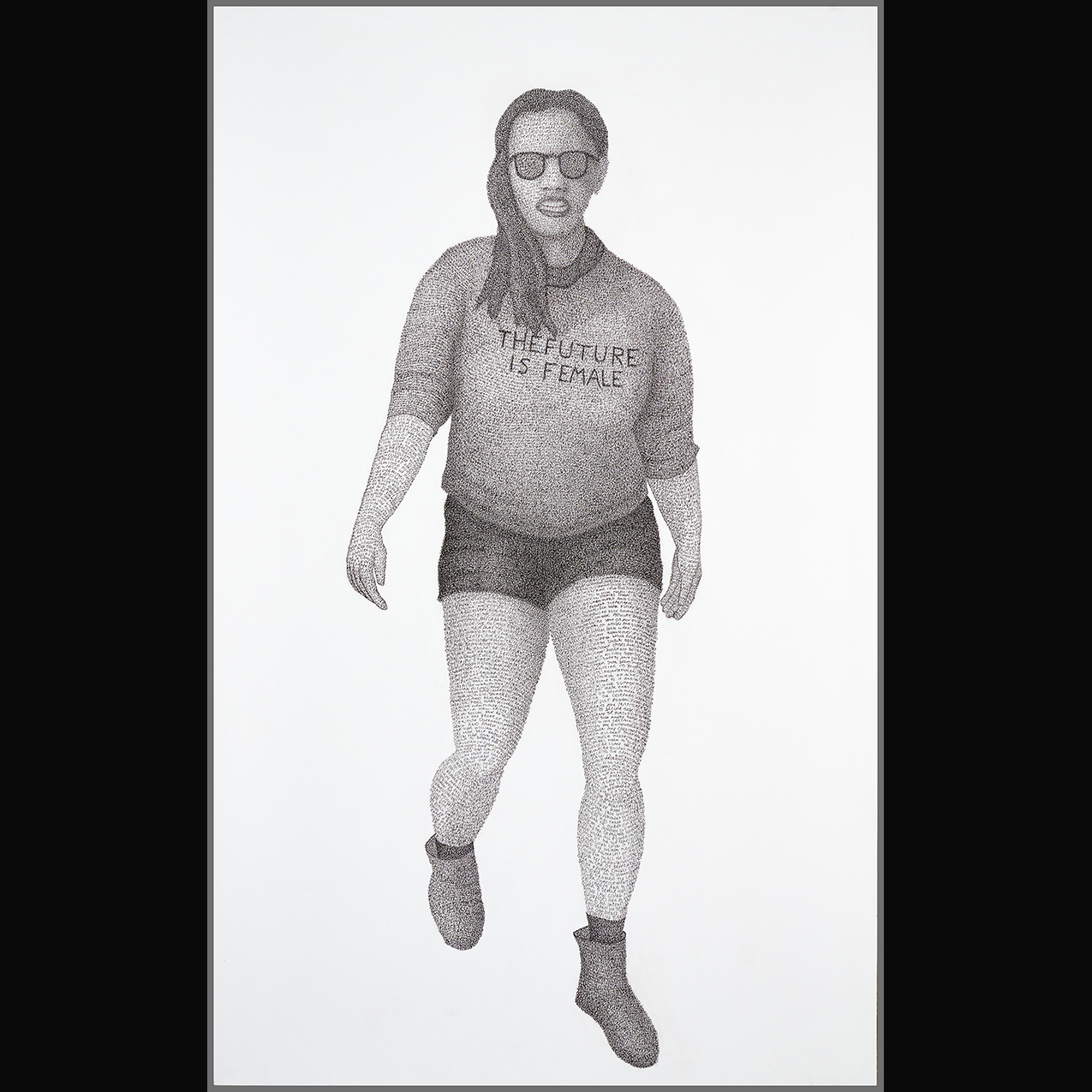
2 of the 18 pieces hanging in the show:

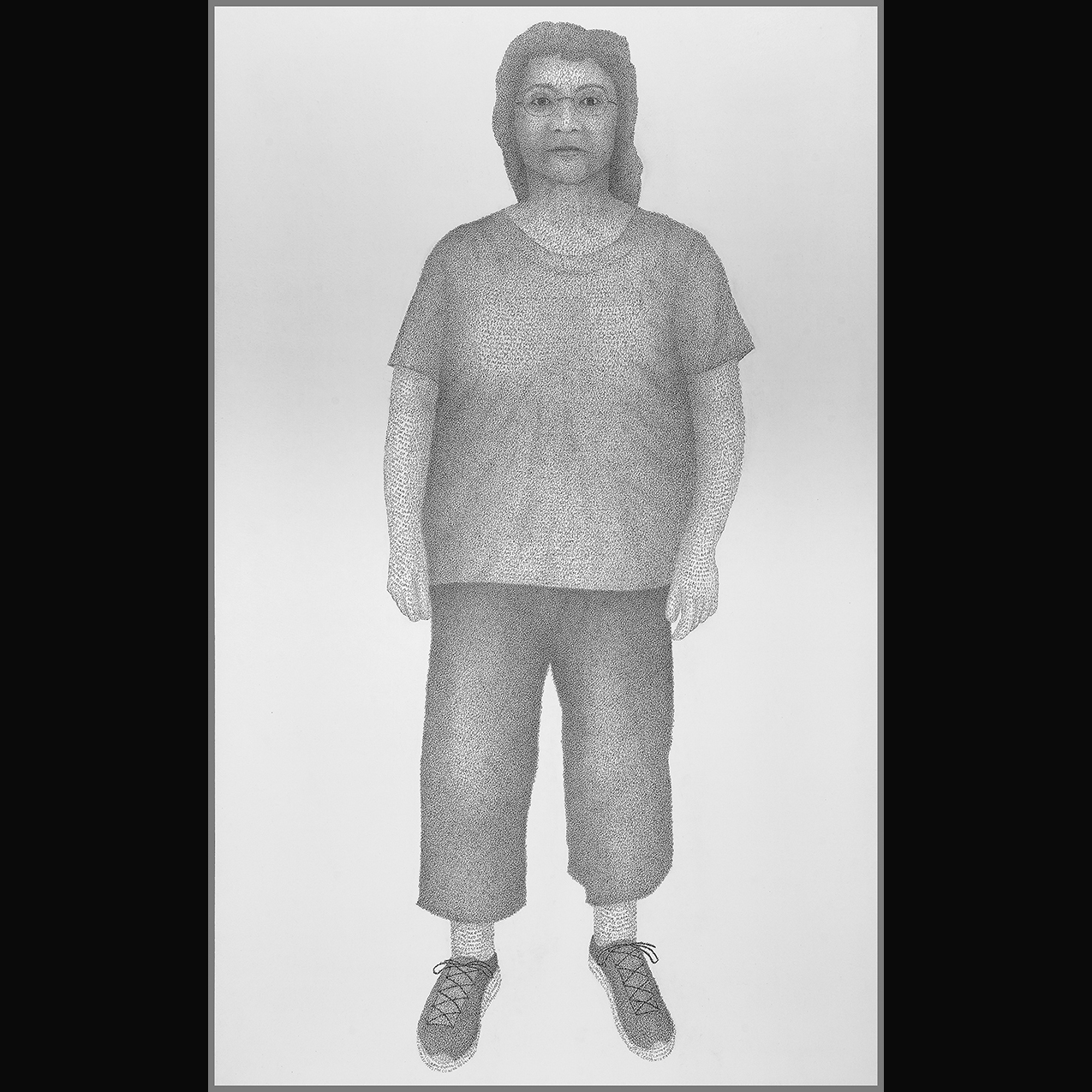
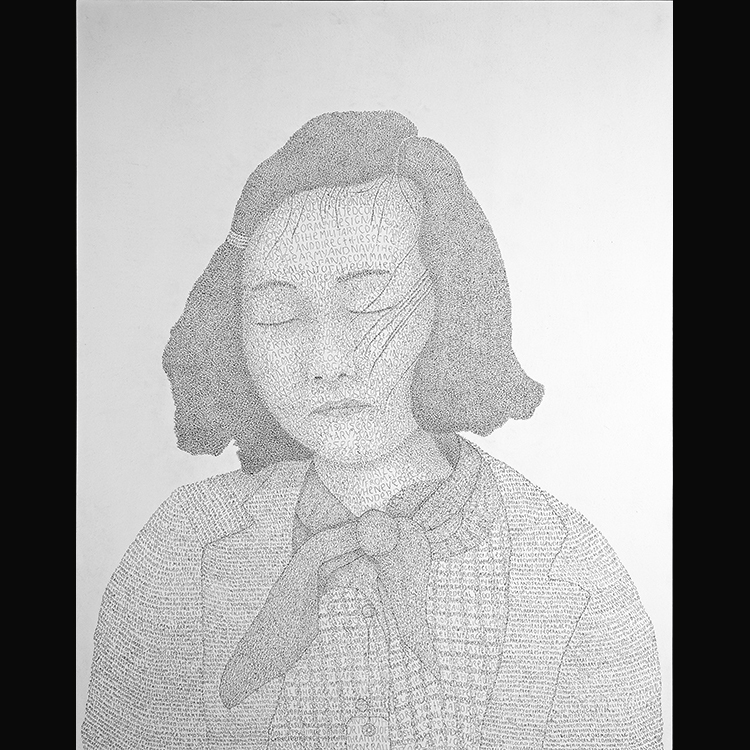
“Tiffany” is the granddaughter of Roy Sakasegawa who was drafted
into the U.S. army in August 1941 from Salinas CA four months before
Pearl Harbor. After the attack Roy’s family was incarcerated along with 120
thousand people of Japanese descent, 62% were American, in Poston
Arizona one of the 10 internment camps set up to house the internees.
Roy went on to serve in the 442nd Infantry division composed of Japanese
Americans who fought mostly in Europe. The 442nd Regiment is the most
decorated unit for its size in U.S. Military history. The unit earned more
than 18,000 awards including 21 Medal of Honor.
The text used to make the marks is Executive Order 9102 that
established the War Relocation Authority the agency responsible for the
forced relocation and internment of Japanese Americans during WWII.
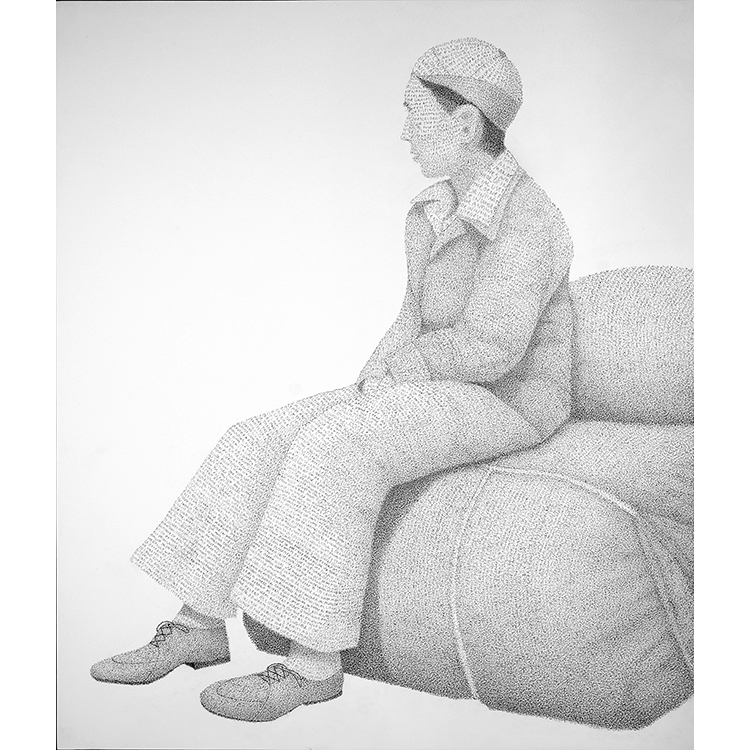
Lorraine’s great grandfather first came to the United States in the
1850’s on a 30ft Sampan, a Chinese fishing vessel not designed to cross an
ocean. He landed in Mendocino County and immediately began work in
the lumber camps as a cook. After going to China in the late 1880’s he tried
to return to his family in California, but due to the Chinese Exclusion Act
of 1882 he had to pay to take the name of a citizen to be allowed back to
his family in California.
The text used to render the portrait is The Chinese Exclusion Act of
1882, which was the first and only law to prevent all members of a specific
ethnic group from immigrating to the United States. Many Americans on
the West Coast attributed declining wages and economic ills to Chinese
workers so Congress passed the Exclusion Act to placate worker demands
and assuage prevalent concerns about maintaining white “racial purity.”
Torrance Art Museum
It is my pleasure to have two pieces included in a show that marks the 50th Anniversary of the Sister-City program between the city of Kashiwa, Japan, and the city of Torrance.To celebrate this milestone Torrance Art Museum is presenting an exhibition of the myriad artistic talents of the Japanese American community based here in southern California. These diaspora artists reflect the complexity and diversity of art practices from those who share a dual legacy, inclusive of the cultures of both countries, to form unique composite expressions of culture.
The show is titled “Bridging the Pacific” and is curated by Max Presneill.
Opening reception January 28, 6-9pm
January 31 thru March 4th
Artists: Tetsuji Aono, Yumiko Glover, Kio Griffith, Clement Hanami, Bryan Ida, Ichiro Irie, Takeshi Kanemura, Wakana Kimura, Ibuki Kuramochi, Kaoru Mansour, Yoshie Sakai, Macha Suzuki, Misato Suzuki, Tomoaki Shibata, Miki Yokoyama

The Billboard Creative interview
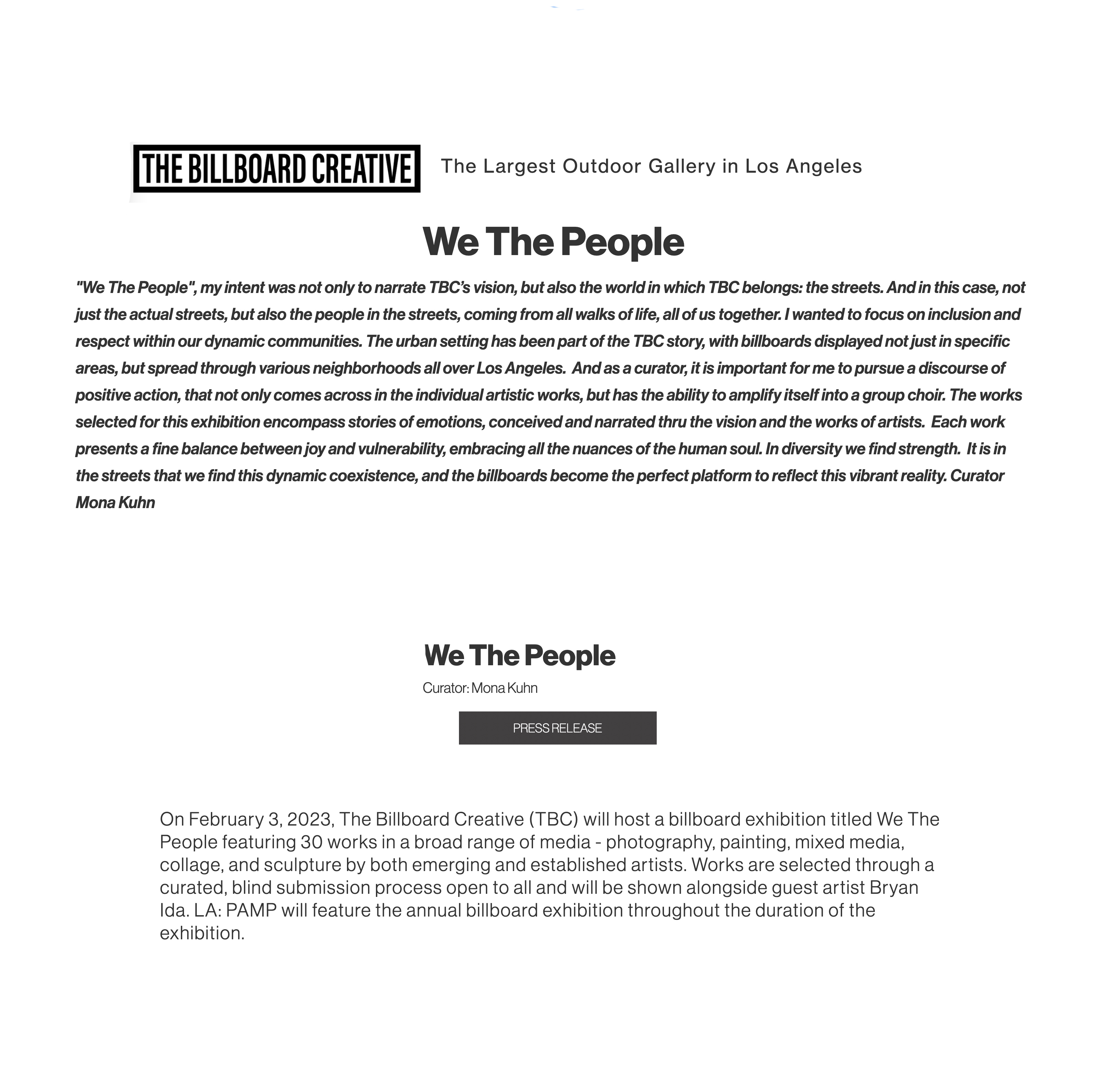
As featured artist for the up coming The Billboard Creative show in February titled “We the People” I had the pleasure to do an interview with curator/fabulous photographer Mona Kuhn going in depth on the inspiration for the series and its meaning to me.
The show features a portrait of my friend Kio Griffith presented on a billboard located in front of Paramount Studios on Melrose Ave. There is an interactive map on The Billboard Creative website.The show will exhibit 30 artist work on billboards across LA.
Thank you Mona Kuhn for your support and kindness, The Billboard Creative for this wonderful show and Adam Santelli for all your hard work.
De Saisset Museum Show
I am honored to present 18 portraits from my “con.Text” series in a solo exhibition at the deSaisset Museum on the campus of Santa Clara University.
Thank you Lauren Baines and Christopher Sicat at the de Saisset Museum for all your hard work and efforts.
The show opens to the public January 24th – June 17th.
I will be showing a new portrait of my grandmother that I just finished that that is based on a photograph taken by Dorothea Lange.
There will be a reception and further programming announced at a later date.
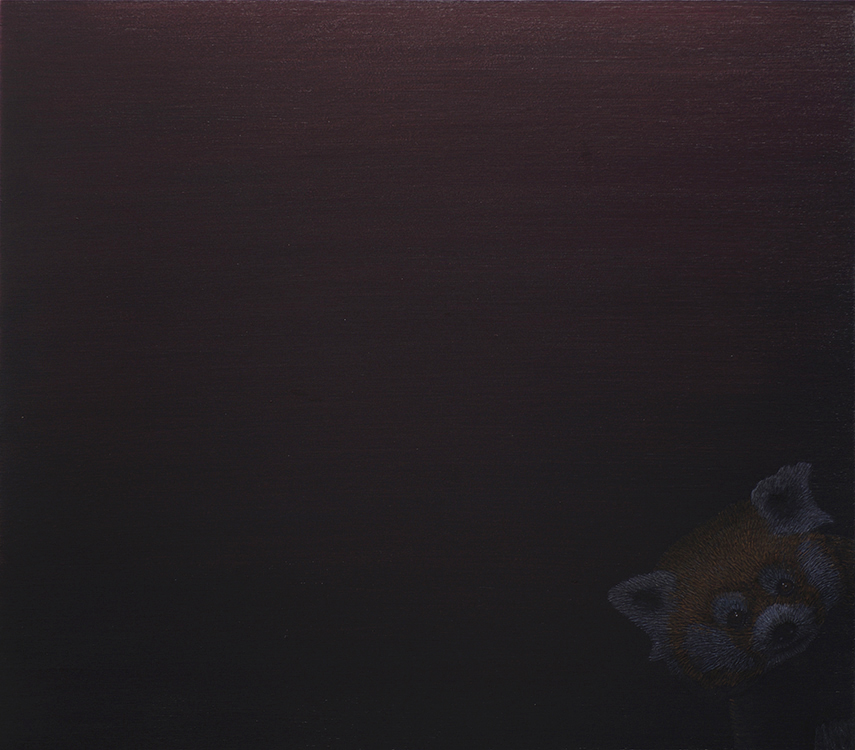
“Red Panda”
21 x 24 acrylic on panel 2022
In my fading light series I depict endangered or threatened species as light fades to dark. The light and the dark represents the contrast between hope and despair
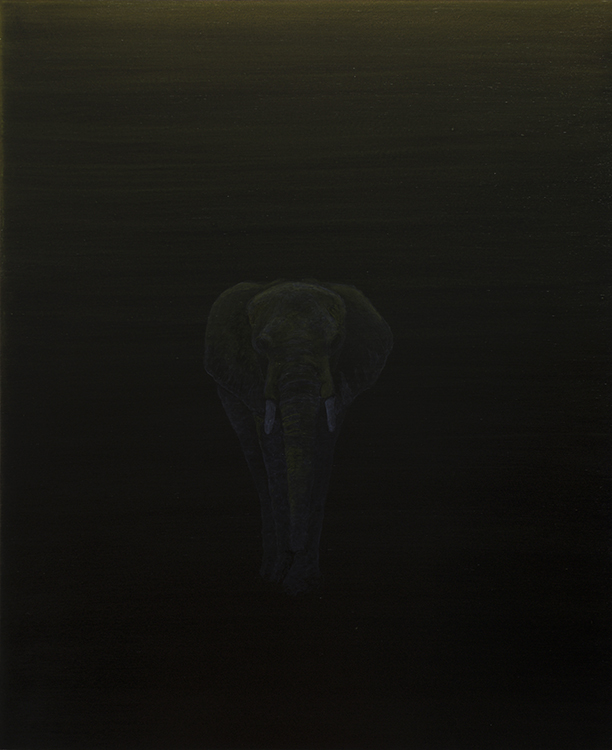
“African Elephant”
27×22 acrylic on panel
In my fading light series I depict endangered or threatened species as light fades to dark. The light and the dark represents the contrast between hope and despair.
“Mount Jade” 29 x 36

“Mt Jade” 29 x 39 acrylic on panel
I was commissioned to do a painting that was inspired by Mount Jade the largest mountain in Taiwan. I chose to depict the mountain and its lush beautiful environment in a piece that juxtaposes the two together.
“ Mt Jade” will be in a traveling exhibition that will tour 3 cities in Taiwan at the end of the year
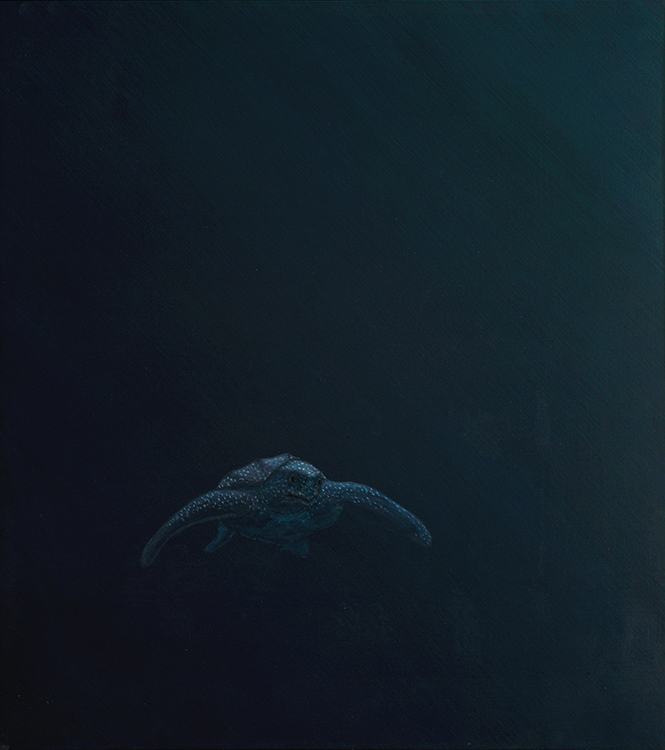
“Leatherback Turtle” 21 x 19
Another from my fading light series that highlights endangered species.
Deep Dark blues and greens.
“Whooping Crane” 21 x 19
I have been healing from nerve damage in my right arm brought on by overwork. These are the first works in 5 months.
“Whooping Crane” 21×19
from the fading light series using deep deep darks

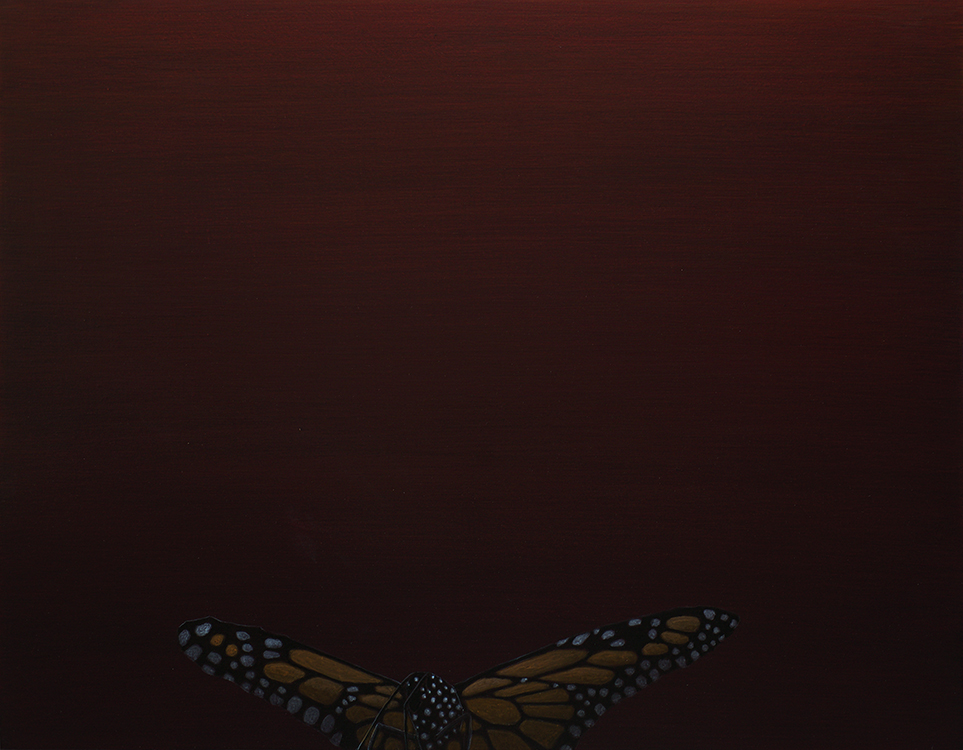
“Monarch” 20 x 26
From my Fading Light series highlighting endangered species.
“Monarch” 20 x 26 acrylic on panel
the dark background is a slow build of transparent glazes to eventually achieve darkness
“Devon”
This is a portrait of Devon. Devon’s grandparents bought a home in the Crenshaw District in 1950, a few years after their illegal imprisonment in the Rowher, Arkansas concentration camp during World War Two. Two years earlier, a portion of the 1913 Alien Land Law was overturned, which enabled Devon’s grandparents the right to buy their 11th Avenue house. Prior to 1948, their right to buy and own a home would have been compromised by the 1913 Alien Land law which disallowed anyone “ineligible to citizenship” from owning or leasing land in California. The Alien Land Laws were specifically tailored to restrict property rights for all Japanese living in California.
The marks that compose the portrait are the words from the Webb Haney Alien Act, which was the first Alien Land law from 1913. The second Alien land law came in 1920 and closed existing loopholes
I am honored that LA Metro/Metro Art commissioned this portrait to be included in their permanent collection. They have been featuring their collection in multi format programs across the county to their ridership.
They will be featuring the work in a show titled “We Are…Portraits of Metro Riders by Local Artists”. It will be on view in the Union Station Passage way Art Gallery and online at:
The show points out the diversity of the community of Metro riders and is presented by Metro Art in collaboration with Metro’s Office of Civil Rights, Racial Equality & Inclusion and the Communication Department.
“Devon” 34 x 27 ink on panel

“Orangutan”
“Orangutan” 24 x 72
Orangutan in its natural environment in Sumatra as it is being cut up and destroyed

“Maple Fall”
“Maple Fall” 36×72
Three paintings to make one. Another in my environment series where I fracture the landscapes, cut them up and tear them apart, and reassemble them into an incomplete whole.

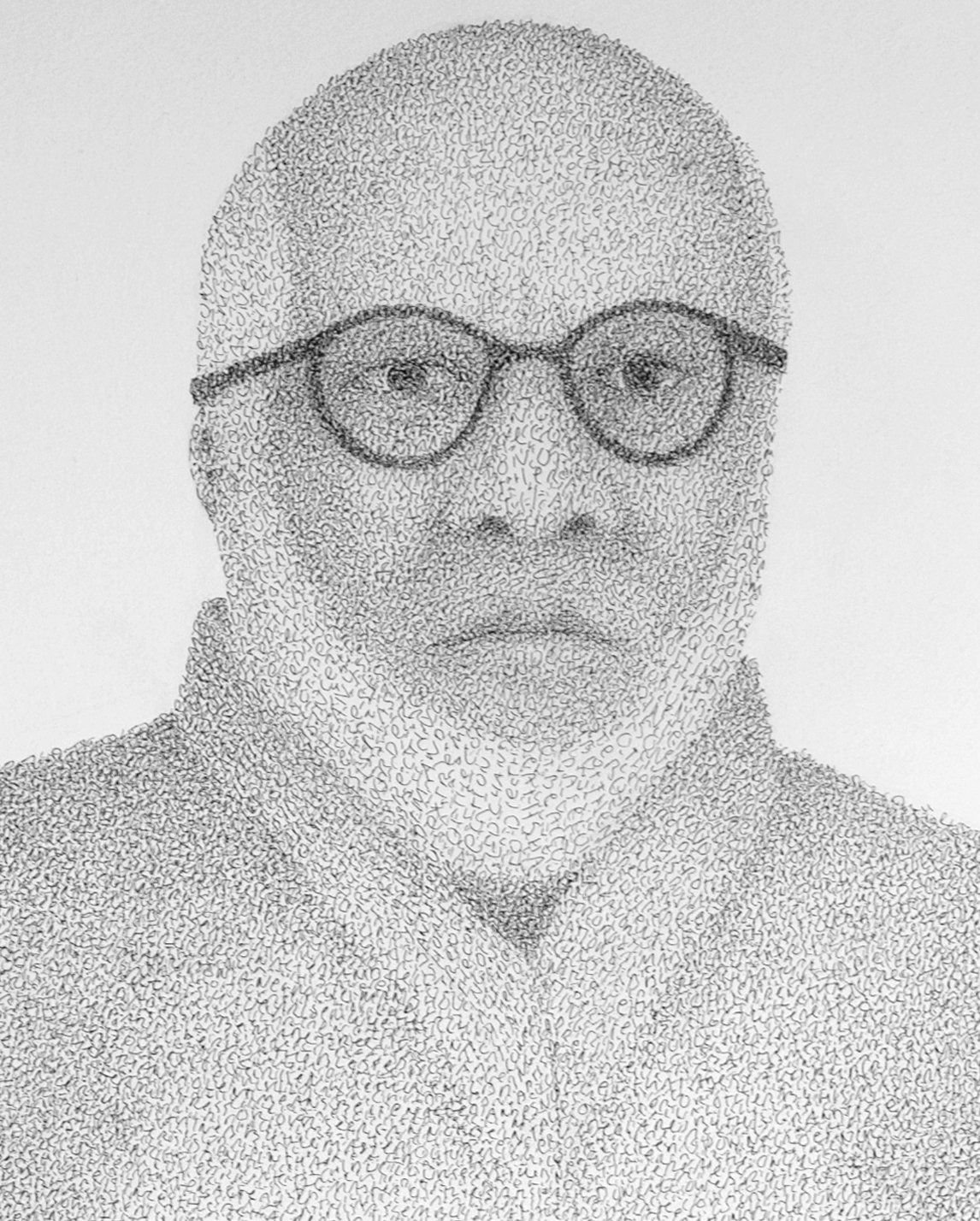
“Gregory”
Gregory’s great, great, great, grandmother “Frankie” was sold into slavery at the Manchester Slave Docks in what is now Ancarrow’s Landing on the James River in Virginia in the 1840’s.
Slavery was first brought to America in 1619 in the colony of Virginia and grew into the 1700’s to become the dominant labor system on plantations.
During the 1660s Virginia adopted laws specifically designed to denigrate blacks. These laws banned interracial marriages and sexual relations and deprived blacks of property. The text is from four of those Laws from Virginia State Law”Gregory”
60×37 ink on panel

Detail:

 Bryan Ida